Holyrood 2026: Highlands and Islands constituency results - a tale of many yellows - and one very significant red

Four of the eight Highlands and Islands constituency seats changed hands at this election - a higher rate of change than almost anywhere else in Scotland. The Liberal Democrats returned to two Highland heartlands they had long regarded as their own, while the SNP took Shetland in a result that ended more than seventy years of Liberal Democrat representation; and Scottish Labour won Na h-Eileanan an Iar in a historic gain that few had predicted.
Across Scotland, the word scunnered has been used to capture the mood of an electorate that turned out in lower numbers than 2021. Turnout settled broadly between 50–60%, though in tightly fought contests - such as Shetland and the Western Isles - every vote counted. The SNP has retained many strongholds, but alongside double-digit vote share reductions. A fractured opposition vote - fuelled in no small part by the rise of Reform - gave a complex picture.
Orkney - the Liberal Democrat's Liam McArthur returned for a historic fifth term
Orkney declared first, as expected. In one of the most fiercely held Liberal Democrat strongholds in Scotland, Liam McArthur was returned for a fifth consecutive term with a remarkable 72% of the vote - a record for the Holyrood elections and a ringing endorsement of the former Deputy Presiding Officer. There was never any real doubt here.

Shetland - SNP's Hannah-Mary Goodlad ends 74 years of Liberal Democrat dominance
Shetland told a very different story. Hannah-Mary Goodlad won the seat for the SNP, ending a Liberal Democrat hold that stretched back to 1950 - a sore loss for a party that has long regarded the Northern Isles as its own.
Hannah-Mary, a geologist and former Equinor employee, published her own manifesto for Shetland and ran a relentlessly local campaign, offering voters a direct "seat at the table" if elected. Speaking to the BBC at the count in Lerwick, she was clear - she was not a career politician, and her campaign had been built over twelve months of open conversations with Shetlanders over cups of tea and fish and chips. One notable detail, she did not wear an SNP rosette at the count.

Na h-Eileanan an Iar - Labour gain from SNP by 154 votes
Donald McKinnon bucked the trend, winning Na h-Eileanan an Iar from long-serving SNP incumbent Alasdair Allan by just 154 votes. McKinnon - a crofter and former manager at a Development Trust is said to have spoken to every voter during his campaign. He put the ferry crisis as the centrepiece of his election pledges, alongside cuts to council funding and the story of depopulation that has haunted the Western Isles for a generation.
He framed the result as a verdict on two decades of SNP governance - the islands had "enough of broken promises, excuses, and being told to settle for less." Significantly, he also pledged to be an MSP for the whole constituency, not just those who voted for him - a pointed message given the slender margin he holds.

Moray - SNP hold, but vote share down sharply
Laura Mitchell held Moray for the SNP, but the numbers tell a more cautious story. Mitchell - who spent more than a decade working in Richard Lochhead's constituency office before stepping into his shoes as the continuity candidate - took the seat with 38.5% of the vote, a fall of over ten points since 2021. Turnout across Moray also dropped 14% to 50.8%.
Tim Eagle, the Conservative's Holyrood Rural Affairs spokesperson and list MSP, came second with close to 10,000 votes but finished 8% behind Mitchell. The more striking number was Reform's Max Bannerman, who took over 5,000 votes - 16.6% of the total - a result that underlines how the fractured right-of-centre vote reshaped the arithmetic across rural Scotland.
Argyll and Bute - SNP vote held up but down 9 points on 2021
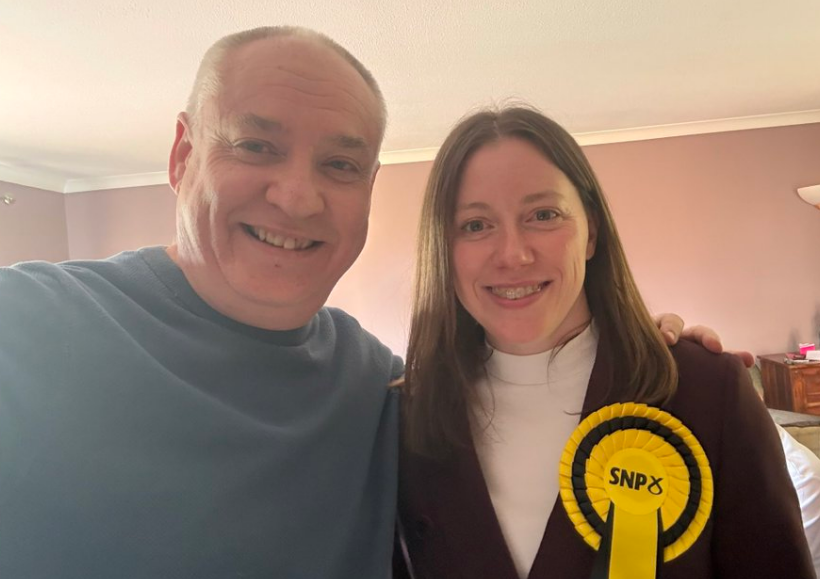
Jenni Minto, former Scottish Government Health Minister, held Argyll and Bute for the SNP, with a majority of 2,551 - a vote share down nine points on 2021. The more interesting development is the Liberal Democrat recovery - Alan Reid, returning as candidate after his years as an MP for the constituency, came second with 8,468 votes, up from 6,874 in 2021.
The Conservative vote collapse tells much of the story - their candidate Councillor Amanda Hampsey defected to Reform before the election, a move that appears to have taken some of the Conservative vote with her. With that vote fragmented between Reform and elsewhere, it is the Liberal Democrats that emerged as the real challenger in Argyll and Bute.

Caithness, Sutherland and Ross - an emphatic gain for the Liberal Democrats
David Green will be one of four new Liberal Democrat constituency MSPs arriving at Holyrood in this election, having convincingly unseated Maree Todd - the Scottish Government's Minister for Drugs, Alcohol and Sport - with 14,666 votes and a majority of over 5,000. It is a result that will resonate well beyond the constituency. Born and brought up in Ross-shire and formerly a media adviser for Christian Aid, Green campaigned across one of Scotland's most geographically demanding constituencies for months, making the case for change against a high-profile incumbent who had held the seat since 2011.
The issues that drove the result were local and specific - the failure to reinstate maternity services at Caithness General Hospital, affordability of housing for young people and the need for better adult social care provision. The seat is now Liberal Democrat at both Holyrood and at Westminster, held by Jamie Stone MP. Along with the win in Skye, Lochaber and Badenoch, this win signals a return to the Highlands for the party.

Inverness and Nairn
Emma Roddick held Inverness and Nairn for the SNP in one of the most closely watched races of the night - and one of the hardest to call. Local dynamics made polling estimates unreliable throughout the campaign, not least because of Fergus Ewing, the former SNP MSP of 27 years who stood as an independent and brought a uniquely personal dimension to the contest. In the end, the Liberal Democrats proved the strongest challenger, but Roddick held on by just 427 votes - against a backdrop of an SNP vote share down 17.9% on 2021.
Roddick, who entered Parliament in 2021 as its youngest ever MSP, campaigned on issues of housing, energy bills and infrastructure, and welcomed First Minister John Swinney to the constituency at several points during the campaign. Inverness sits at the centre of Scotland's energy transition - a story that could shape the Highlands and Islands economy for a generation.
Skye, Lochaber and Badenoch
Andrew Baxter took Skye, Lochaber and Badenoch by 950 votes for the Liberal Democrats in one of the most significant results of the night - denying the SNP in the seat that was formerly held by Kate Forbes, Deputy First Minister. Baxter, a Liberal Democrat councillor for Fort William and Ardnamurchan, who also managed the constituency office of MP, Angus MacDonald, paid tribute to his predecessor Kate Forbes after the count which concluded around 9pm in Inverness.
The loss of two of the largest mainland Highland constituencies to the Liberal Democrats in a single night will resonate far beyond the Highlands. Together with David Green's win in Caithness, Sutherland and Ross, Baxter's victory delivers what party leader Alex Cole-Hamilton had set out to achieve - the return of the Highland heartland to the Liberal Democrats. They now hold neighbouring seats covering a vast sweep of the north and west of Scotland, and will arrive at Holyrood with both the numbers and the mandate to make the Highlands heard.


Comments